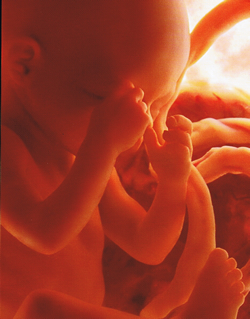
What Is Intrauterine Growth Restriction?
 Intrauterine-Growth Restriction indicates that a fetus is small for it’s gestational age, which by definition, it’s birth weight is below the 10th percentile for it’s gestational age. If the gestational age is correct, i.e., the pregnancy is as far along as expected and the weight falls below the 10th percentile, then there is reason for concern, as babies which suffer from Intrauterine-Growth Restriction have a higher death and injury rate than those who are within the 10th percentile.
Causes of Intrauterine-Growth Restrictions
Here are some conditions which may increase the chances of Intrauterine-Growth Restriction:- Smoking and Alcoholism
- Very low weight gain during pregnancy
- Pre-eclampsia or high blood pressure
- Cytomegalovirus, rubella or other infections
- Anemia
- Women who have had previous growth-restricted babies.
How is Intrauterine-Growth Restrictions treated?
It can be very difficult to diagnose Intrauterine-Growth Restriction, as your baby is usually measured with each visit in conjunction with your uterus and this is done over a period of time. If there is no change in your baby’s growth, then there may be some concern and tests may be ordered. Once Intrauterine-Growth Restriction is diagnosed there are a number of different methods which are used to try and improve the situation at hand.- Bed Rest: your resting allows the baby to receive the best blood flow, and this should have the best effect on your baby’s weight gain and growth.
- Eating correctly: ensuring that you are following a good nutritious diet will also help maximize the chances of your baby’s weight gain and growth.
- Smoking and Alcohol: if you are using these substances, stopping this use will have a good effect on both you and your baby.
- Induced birth: in some cases it may be better for your baby to be outside your uterus than in. If your pregnancy is far along enough, and your healthcare provider has established that your baby is better off outside the uterus, he may elect for a C-Section to be performed.
Intrauterine Growth