
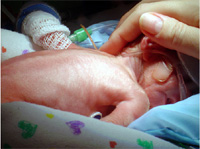
 A premature birth increases the risk of potential complications in your baby, but unfortunately it also increases the chances of death. Generally babies born prematurely weight less than 5.5lbs.
In 1950 the neonatal death rate was about 2% per 1000 live births, but nowa days the rate is less than 1% over 1000 live births.
A premature birth increases the risk of potential complications in your baby, but unfortunately it also increases the chances of death. Generally babies born prematurely weight less than 5.5lbs.
In 1950 the neonatal death rate was about 2% per 1000 live births, but nowa days the rate is less than 1% over 1000 live births.
What are the causes of Premature Birth?
Unfortunately in most cases the causes of premature birth and labor are unknown, however there are a few reasons that we do know which may cause premature birth:- Abnormally shaped uterus
- Multiple babies
- Polyhydramnios or hydramnios
- Placental abruption
- Placenta Previa
- Incompetent Cervix
- Severe maternal illness
What tests are there for premature labor?
Your healthcare provider may run a test called SalEst to try and determine if you may be prone to premature birth. This test measures the levels of the hormone called estriol, as past cases have shown that there is often a surge of this hormone in the weeks prior to premature labor beginning. A positive result may indicate that a women has up to 7 times more chance of going into labor prior to the 37th week of her pregnancy.Treatment of Premature Labor
Once premature labor sets in there are a number of important questions which need to be asked:- Is it better for the baby to remain in the uterus or to be delivered?
- Is the given gestational age of the baby correct?
- Is this really labor or just Braxton Hicks?
- Rapid Heart Beat
- Increased Blood Sugar
- Lower blood potassium
- Fluid in the lungs
- Maternal metabolic changes
- Headaches
Premature Birth