Functions and Roles Of The Placenta
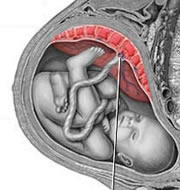 For nine months the placenta feeds and nourishes the fetus while also disposing of toxic waste. Without it the baby could not survive. After your baby is born, the placenta no longer serves a function.
Among organs, it is unique. It is the only organ in the human body that serves a vital function and then becomes obsolete.
For nine months the placenta feeds and nourishes the fetus while also disposing of toxic waste. Without it the baby could not survive. After your baby is born, the placenta no longer serves a function.
Among organs, it is unique. It is the only organ in the human body that serves a vital function and then becomes obsolete.
What does the Placenta do?
The placenta’s primary role is to ensure that oxygen is moved into your baby’s blood stream and carbon dioxide is carried away from your baby – however the waste is not limited to oxygen and also includes cleaning out other waste which is produced by your baby. In the same way that it ensures oxygen reaches your baby, it also plays a role in ensuring that some nutrients are received. The placenta is an extremely complex piece of biological equipment. It is a little bit like an artificial kidney, it allows your blood and the baby’s to come into very close contact – but without ever mixing. This enables your blood to pass across nutrients and oxygen to the baby, and waste products like carbon dioxide to go back from baby to mother. It acts as the lung, kidney and digestive system for the baby. The placenta also plays an important role in hormone production. Human chronic gonadotropin, or hCG is produced by the placenta. This hormone can be found in your baby’s blood stream as early as 10 days into your pregnancy. This is of course not the only hormone which the placenta produces as it is also responsible for the production of estrogen and progesterone . The placenta also performs the important function of protecting your baby for possible infection – however, it is not always able to distinguish between what is a good substance and what isn’t – and this is why pregnant women are asked to avoid substances which may cause harm, such as caffeine, alcohol, herbal substances and drugs. Read our article on what to avoid when pregnant for more.How big does the Placenta get?
During the course of your pregnancy we follow the growth and development of your baby closely, but we never look at how the placenta is growing. By week 10 of your pregnancy the placenta would already weigh in at ¾ ounce (20g) and by week 20 it will already be weighing in at 6 ounces (170g). At 30 weeks it’s weighing 15 ounces (430g) and by the time your pregnancy is full term the placenta would weigh 1.5 pounds (650g)!The Placenta & Possible Complications
Unfortunately as important as the placenta is, it is also possible of causing complications, and the two most common complications are placenta previa and placenta abruption. .Functions Of The Placenta